

DECATUR, Ill. — Former Millikin University football players, coaches, family members and friends gathered Saturday, May 2, to celebrate the life and lasting legacy of former Big Blue football coach Carl Poelker ’68, honoring a coach whose impact reached far beyond the football field.
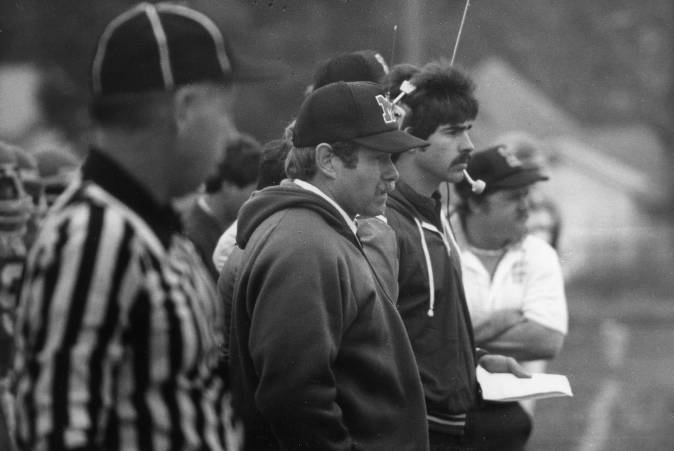
The Celebration of Life ceremony was held in the Rathje Athletic Center’s Perryman Family/Coach Carl Poelker Weight Room, a fitting setting for a tribute to a coach remembered for his toughness, discipline, attention to detail, and deep devotion to the young men he coached. Poelker, Millikin’s all-time winningest football coach, led the Big Blue from 1982-95, compiling an 88-39-1 record and winning two College Conference of Illinois and Wisconsin championships. Before becoming head coach, he served 14 years as an assistant coach, including nine years as defensive coordinator.
A 1968 Millikin graduate, Poelker played defensive line for the Big Blue and earned All-District honors. He was inducted into the Millikin Athletic Hall of Fame in 1981 for football, basketball, and track and field.
The day’s ceremony was led by Master of Ceremonies Jeff Monken ’89, a former Big Blue player and current Head Football Coach at Army, who welcomed generations of Millikin football alumni back home to remember the coach who helped shape their lives.
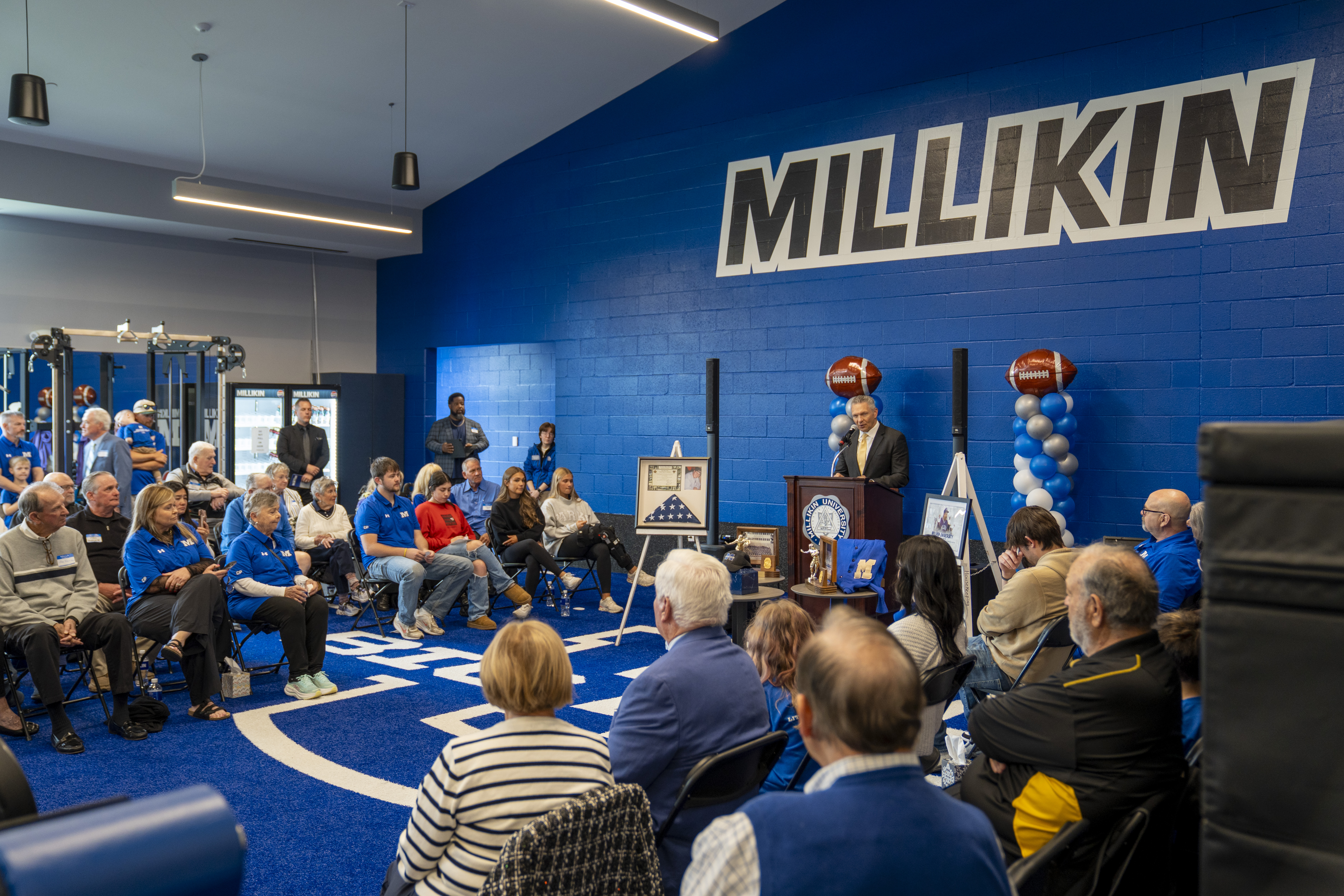
“We’re all tied together in this brotherhood, in this family of Millikin football because of Coach Poelker,” Monken said. “We’re all here because of him.”
Monken described Poelker as a mentor whose lessons have continued to guide him throughout his own coaching career. He recalled Poelker as a demanding coach who held his players to a high standard, but always from a place of care.
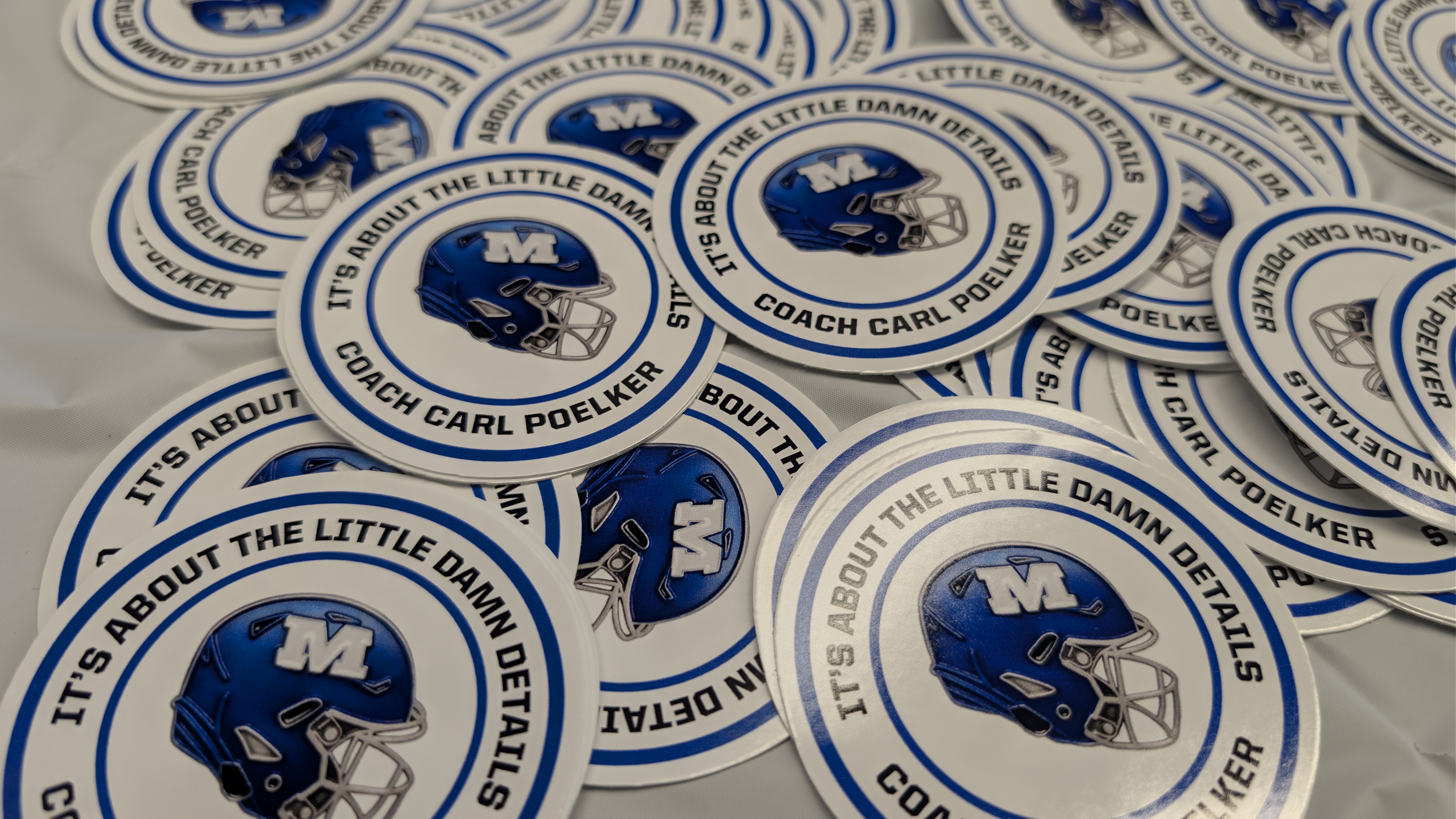
“He was tough. He demanded discipline. He was a stickler, as we all know, for the little damn details,” Monken said. “But all those things came from a place of love. He really wanted to see us succeed, each of us as individuals, but it was always about the team.”
That phrase — “the little damn details” — became one of the defining themes of the day, repeated by several speakers as a shorthand for Poelker’s coaching philosophy. For his former players, it represented more than football execution. It meant preparation, accountability, character, and doing the small things right every day.
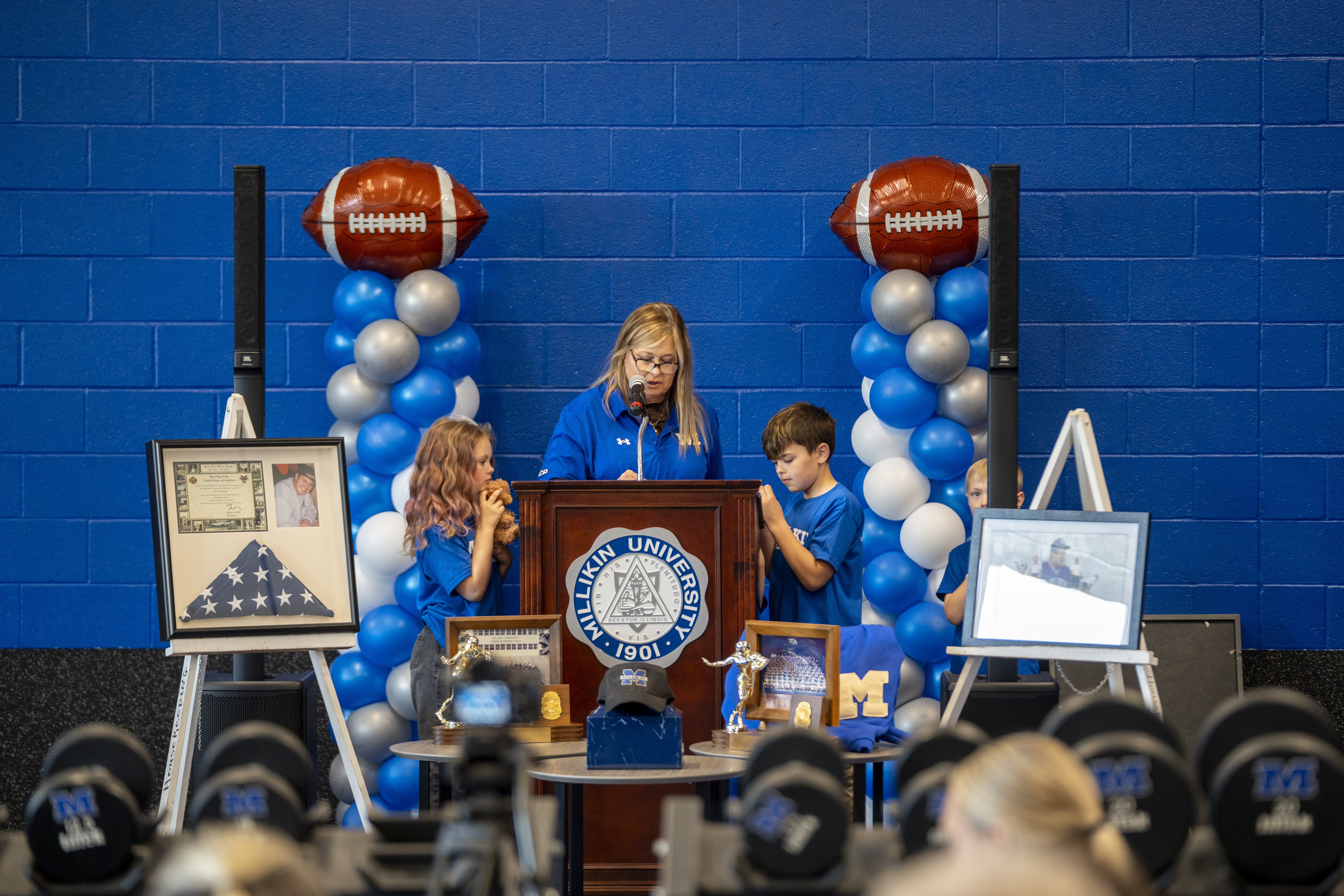
Poelker’s daughter, Traci Poelker Eckenrod ’90, offered a family reflection, thanking the former players, coaches and friends who came to celebrate “your coach and friend, and our dad and papa.”
Eckenrod said Millikin was woven deeply into her father’s identity, first as a student-athlete and later as a coach and teacher. She remembered that even as dementia took other memories from him, Poelker continued to remember the details of the players he coached.
“He could forget where he set things down or ask you the same question every few seconds, but he could still tell you a linebacker’s number from 1984, where he was from, and what he did after college,” Eckenrod said. “That never went away. Names, numbers, hometowns, careers, even details about parents. He held onto those little damn details because to him, people mattered.”
For Eckenrod, that was the central lesson of her father’s life: people mattered most. She said her father did not measure life by possessions or accolades, but by relationships, stories and the people he was fortunate to love.
“If our lives are measured by people’s lives we touch, by lessons we leave, and by stories being told after we’re gone, then my dad’s life was very fruitful, and we’re all better because he was here,” she said.
Former teammate and player Dave Polovina ’71 shared remarks by video, remembering Poelker first as “No. 77,” a teammate who led by example with toughness and quiet confidence, and later as a young position coach who taught lessons Polovina carried for the rest of his life.
Polovina said Poelker gave him “the four pillars of success: work hard, be prepared, do your job, and team comes first.”
“Those just weren’t football lessons, they were life lessons,” Polovina said. “They stay with you in your family life, in your career, how you face challenges, how you treat others.”
Current Millikin Head Football Coach Billy Riebock spoke about the responsibility of carrying Poelker’s legacy forward. Riebock said Poelker’s influence can still be felt in the culture of Big Blue football, from former players and coaches to the current team.
“The impact he’s had, just on my life — and I know he’s had an impact on all of yours — you can’t put it into words,” Riebock said.
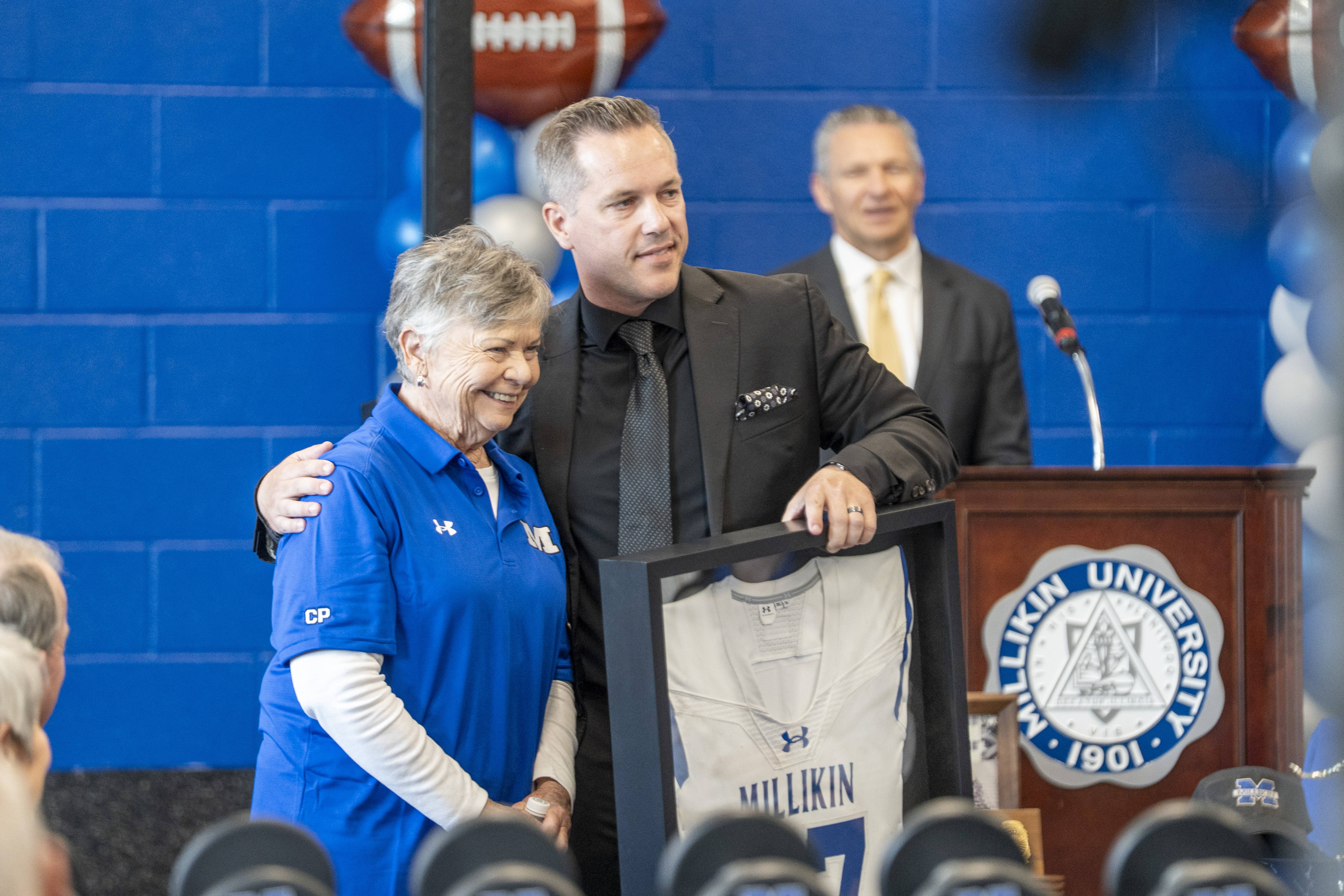
Riebock also announced that Millikin football will honor Poelker throughout the upcoming season by wearing “CP” on the back of its helmets, a tribute he said would remain in place as long as he is head coach. The current team also revealed a No. 77 jersey in honor of Poelker’s playing number.
“We continue coach’s legacy by how we live, how we think, how we act,” Riebock said. “That’s where we’ve got to keep pushing, keep affecting our communities, keep affecting this institution, and keep growing and showing the power that is Big Blue Football.”
Marv Dampeer ’85, who played for Poelker and later became a longtime football official, reflected on how Poelker helped open doors for him in officiating. Dampeer said a call from Poelker and other Millikin coaches helped him begin a career that lasted more than 30 years.
“I am so humbled that you all thought enough of me to ask me to pay tribute to my coach,” Dampeer said before offering a rendition of “How Great Thou Art.”
Cordell Ingram ’95 framed Poelker’s legacy through the image of planting seeds. He said Poelker planted those seeds not just through playbooks and practices, but through people — young men who grew through consistency, accountability, and belief.
“Coach Poelker planted seeds, not just in playbooks, not just in practice with those nasty circuits and gassers, not just on game day, but in people,” Ingram said. “He planted them in young men who showed up not fully formed, not fully confident, not fully disciplined. And through the years of consistency, accountability, and belief, he helped us grow.”
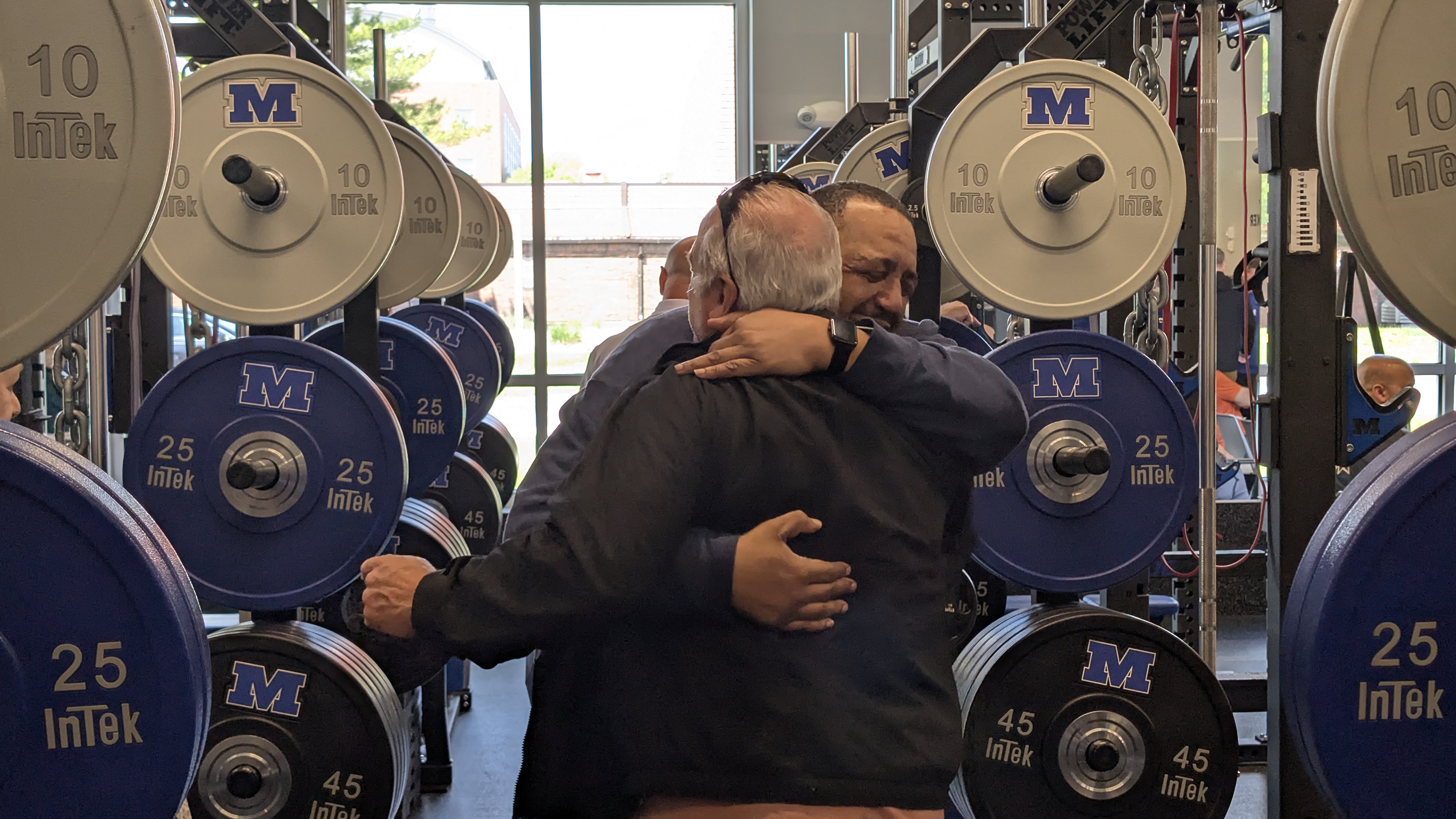
Ingram also recognized Poelker’s wife, Peggy ’91, for the sacrifices she made as part of a coaching family.
“For over 50 years, Peggy lent Coach Poelker to football,” Ingram said. “She gave him the space and the support to do what he was called to do — to lead, to teach, to build. And in doing so, she became a part of every life he touched.”
Former players Matt Snyder ’92 and Tony McClain ’92 reflected on the 1989 CCIW championship team, one of the signature seasons of Poelker’s Millikin career. Snyder recalled a team that beat Augustana, completed an undefeated regular season, won a conference championship, and made the playoffs.
Jim Perryman ’83 and Marty Heller ’84 also spoke about Poelker’s influence as a coach, mentor, and father figure. Heller remembered Poelker as someone who asked about players’ families and cared about their lives well beyond football.
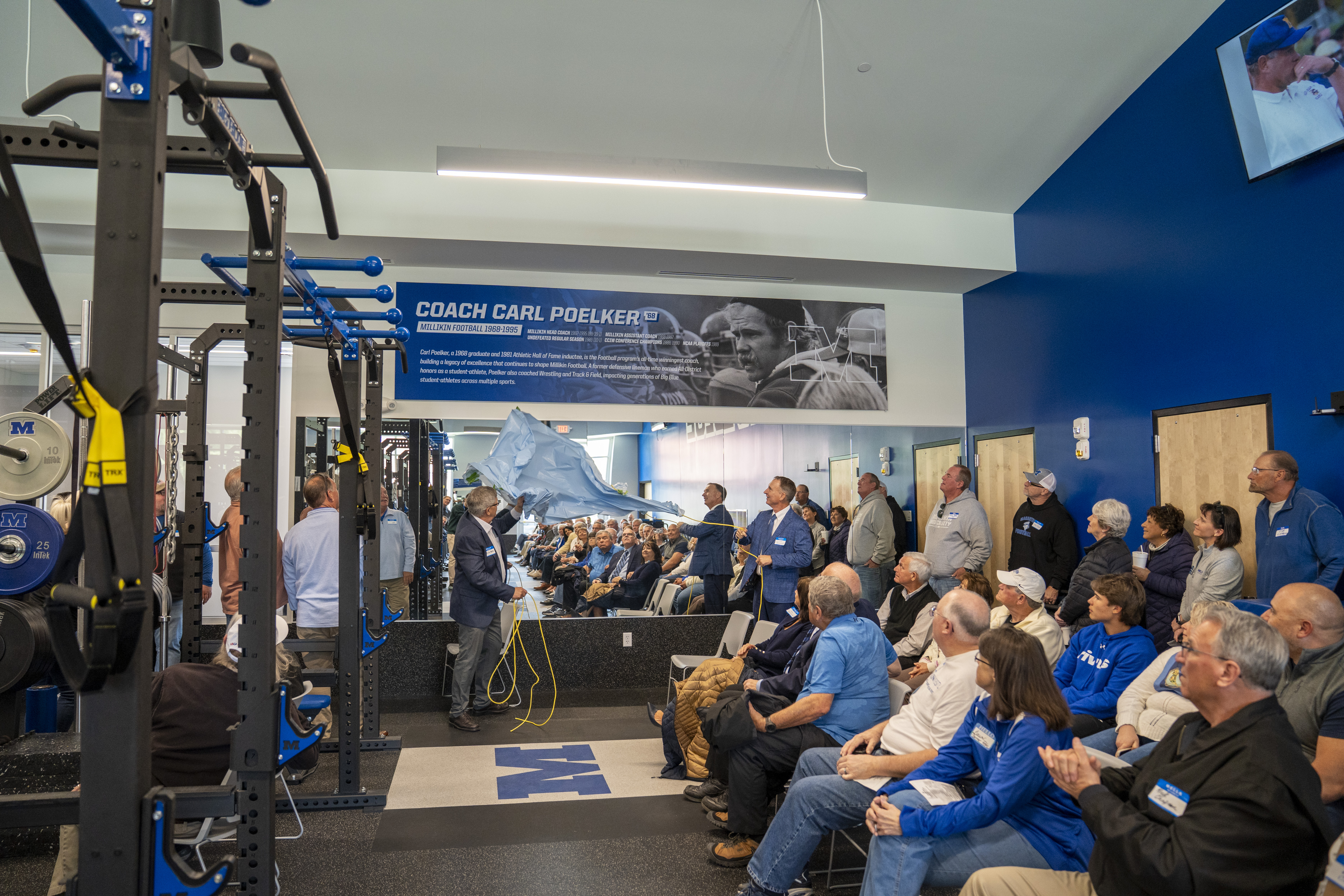
“He shaped our lives,” Heller said. “We were students first and athletes second.”
After leaving Millikin in 1995, Poelker restarted the football program at McKendree University and led the Bearcats for 17 seasons, winning seven conference championships and making nine NAIA National Tournament appearances.
But Saturday’s ceremony made clear that Poelker’s legacy at Millikin is not limited to championships, records, or halls of fame. His legacy lives in the players he coached, the families he influenced, the coaches he mentored, and the Big Blue football brotherhood he helped build.
“Coach hasn’t coached a game here in over 30 years,” Monken said, “but look at the gathering that’s here of the former players and how he’s had an influence on us.”
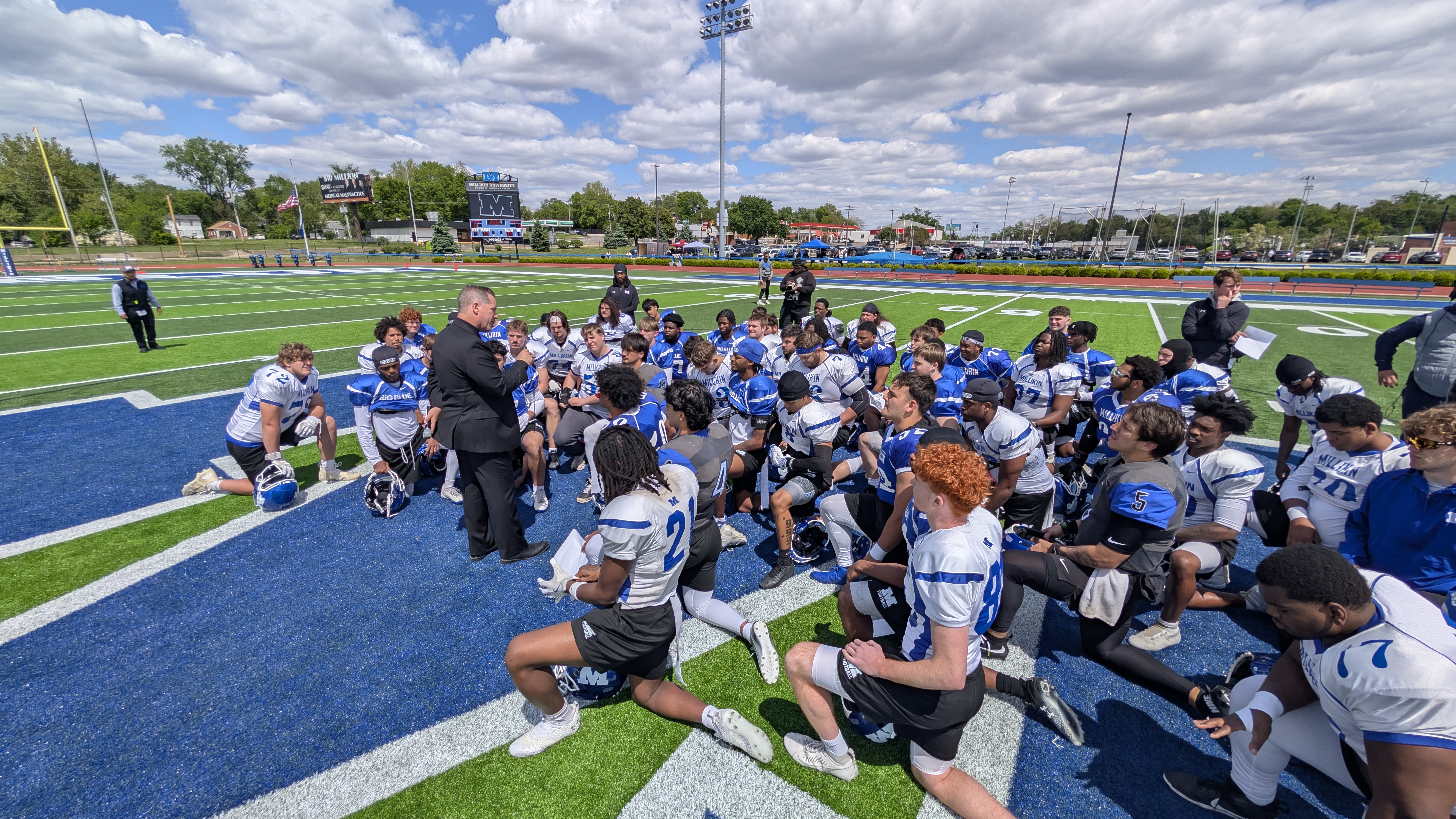
The celebration continued Saturday afternoon with an on-field remembrance ceremony at Frank M. Lindsay Field and Millikin football’s Blue-White Scrimmage — an appropriate tribute to a coach who loved the game, loved Millikin and loved the people he coached.
As Monken said in closing, Poelker’s influence continues through the lives of those he touched.
“This is what has benefited his life — lives that are now touching other lives,” Monken said. “The influence that he continues to have on our families, our organizations, that’s a legacy.”


